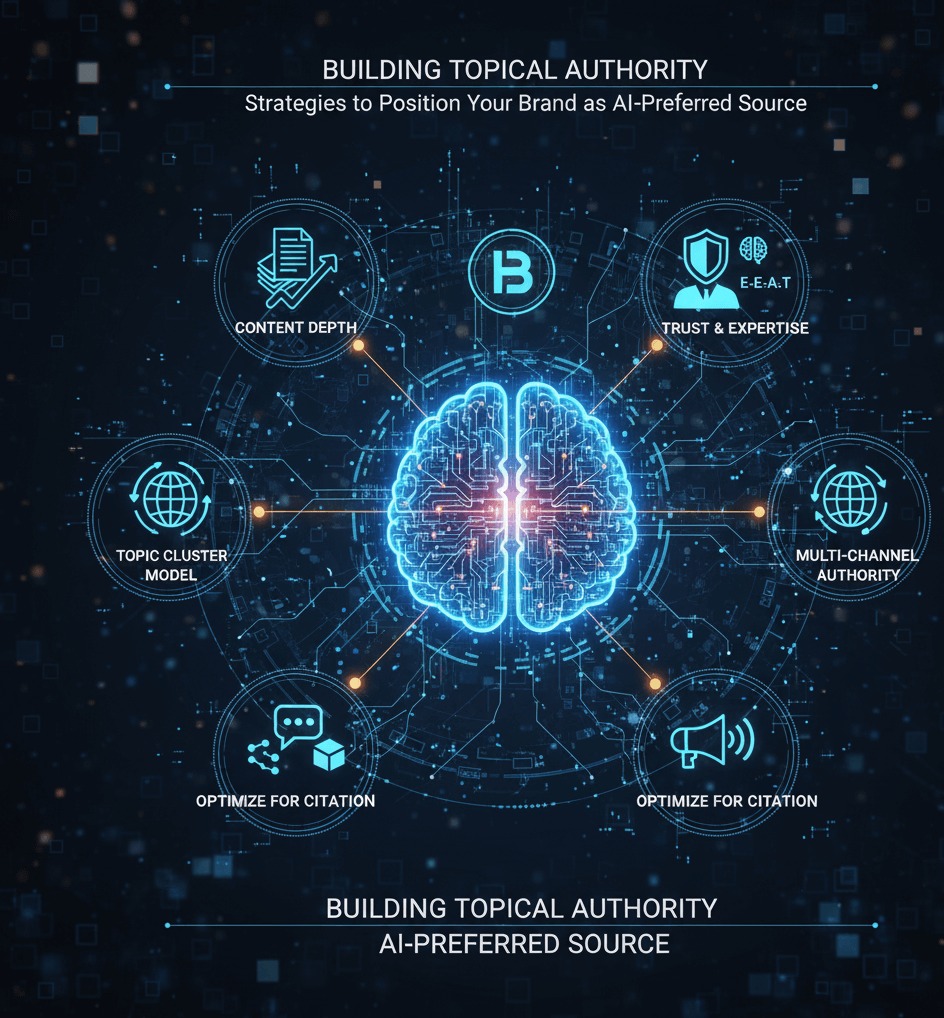
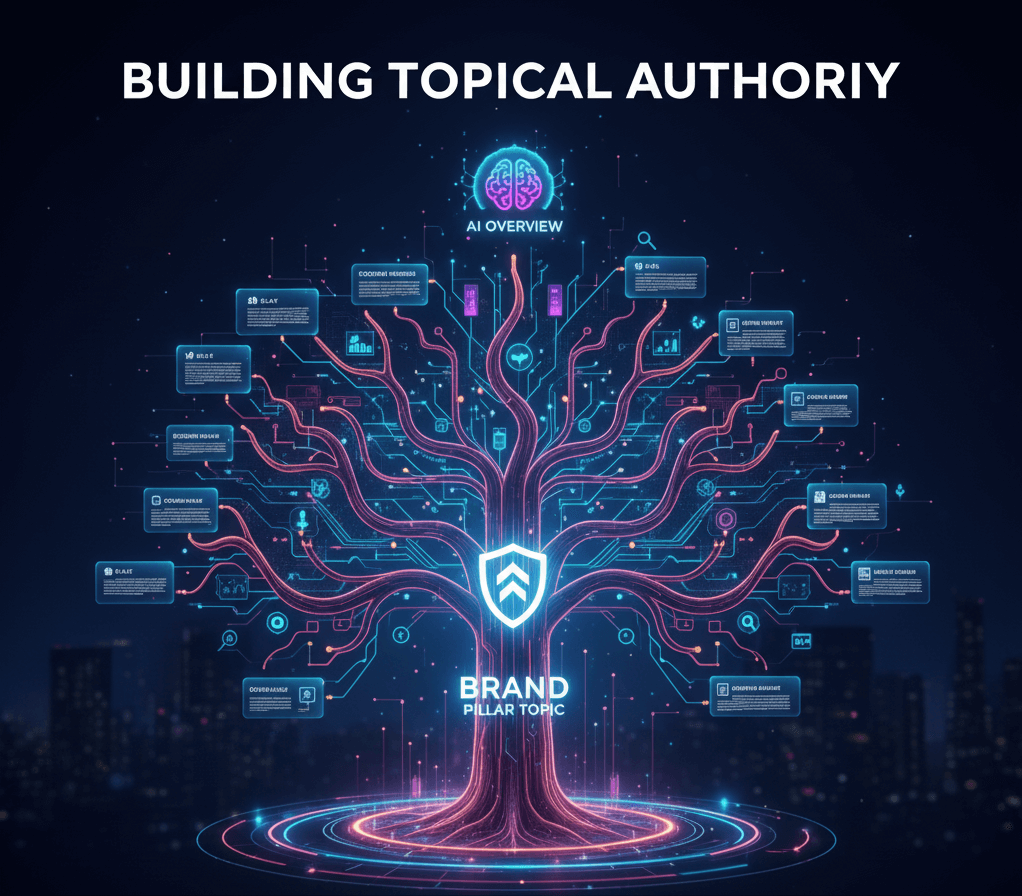

Did you know that in 2025/26, zero-click searches account for 65% of all Google queries, with AI Overviews synthesising answers from just a handful of trusted sources, leaving most brands invisible unless they establish unshakeable topical authority?
Key Areas We Will Cover
- The shift from traditional SEO to topical authority in an AI-dominated search landscape
- Why zero-click trends demand urgent action for B2B brands seeking AI citations
- Core strategies for developing deep content clusters and semantic relevance
- Earning third-party citations and high-value backlinks through targeted outreach
- Participating in knowledge graphs to solidify entity recognition
- Monitoring progress with Semrush entity signals and key authority metrics
- Real-world tactics for B2B executives to measure and scale authority growth
- Actionable steps to future-proof your brand as an AI-preferred expert
Introduction
In 2025/26, building topical authority has evolved from an SEO tactic into a strategic imperative for B2B brands navigating AI-driven search. Topical authority refers to your domain’s perceived expertise on a specific subject, enabling AI engines like Google’s Search Generative Experience and ChatGPT to cite your content as a primary source. For industry leaders and executives, this means positioning your brand not just for rankings, but for direct inclusion in synthesised answers that influence 61% of decision-makers. As zero-click searches surge, mastering these strategies ensures your insights shape conversations, foster trust, and drive qualified leads without relying on traditional traffic.
Let’s Discuss Your Needs
The Rise of Topical Authority in AI Search
AI search prioritises sources that demonstrate comprehensive, trustworthy coverage over isolated keyword optimisation, unlike legacy SEO focused on page one visibility, topical authority signals to algorithms that your brand owns a niche through interconnected content, external validations, and entity clarity.
This shift aligns with Google’s E-E-A-T framework (Experience, Expertise, Authoritativeness, Trustworthiness), now amplified by AI’s semantic understanding. Brands with strong topical authority see 2-3x more citations in AI Overviews, turning informational queries into brand endorsements. For B2B executives, the stakes are high: without it, your thought leadership risks obscurity in a landscape where 70% of searches end on the SERP.
Why Zero-Click Search Trends Demand Topical Authority Now
Zero-click searches, where users receive answers directly on results pages, have reached 60% of global Google queries in 2025/26, up from 50% in 2019. Mobile exacerbates this, with 77% of sessions yielding no clicks, as AI Overviews consolidate insights from authoritative entities.
For B2B brands, this urgency translates to lost opportunities: 80% of buyers rely on AI summaries for research, favouring sources with proven depth. Ignoring topical authority cedes ground to competitors, as AI engines like Perplexity and Gemini prioritise ‘highly cited’ domains. The solution? Build a moat of expertise that compels inclusion, boosting brand recall and indirect conversions by 40% in high-consideration sectors like SaaS and consulting.
Developing Content Clusters for Semantic Depth
Content clusters form the backbone of topical authority, creating a web of pillar pages and supporting assets that signal expertise to AI crawlers.
Crafting Pillar Pages and Spoke Content
Start with a pillar page a comprehensive guide covering your core topic, such as “The Future of B2B Supply Chain Resilience in 2025/26”. Link it to 10-15 spoke articles addressing subtopics like “AI-Driven Inventory Forecasting” or “Sustainable Sourcing Regulations”. This structure enhances internal linking, distributes authority, and covers query fan-out, anticipating related questions AI users might ask.
Aim for originality: Incorporate proprietary data, case studies, or contrarian insights to differentiate from AI-generated consensus. Update clusters quarterly to combat time decay, ensuring the freshness that AI models reward.
Leveraging Entities for Semantic Relevance
Incorporate entities key concepts, people, or tools like “ERP systems” or “ISO 14001 standards” naturally throughout clusters. Use tools like Google’s Natural Language API to identify gaps, then weave in attributes (e.g., benefits, comparisons) for richer context. This semantic depth boosts E-E-A-T, making your content 30% more likely to appear in AI citations.
Earning Third-Party Citations and Backlinks
Third-party validations act as endorsements, elevating your domain’s trustworthiness in AI eyes. Focus on quality over quantity: a single citation from Forbes outweighs dozens from low-relevance sites.
Guest Contributions to Niche Publications
Target industry journals, LinkedIn newsletters, and trade mags with guest posts offering unique value, such as “How Quantum Computing Reshapes B2B Risk Management”. Pitch via HARO (Help a Reporter Out) for expert quotes, securing mentions in 20% of responses. Follow up with outreach: Email editors citing your pillar content for natural links, aiming for 5-10 per quarter.
Digital PR and Original Research
Commission studies like a survey of 500 executives on AI adoption to generate shareable assets. Distribute via PR Newswire, earning backlinks from outlets like Business Insider. Track with Ahrefs for relevance (DR > 70), ensuring links point to cluster pages to amplify authority flow.
These tactics can increase citations by 50% within six months, directly correlating to AI inclusion.
Participating in Knowledge Graphs for Entity Recognition
Knowledge graphs, like Google’s, map brands as verifiable entities, influencing 25% of AI responses. For B2B brands, participation means becoming a node in this ecosystem linked to attributes like “innovative fintech solutions”.
Claiming and Optimising Your Entity
Verify your Google Knowledge Panel via Google Search Console, ensuring consistent NAP (Name, Address, Phone) across 50+ directories. Implement LocalBusiness and Organisation schema on your site to feed structured data, clarifying relationships (e.g., “subsidiary of” or “partner with”).
Building Graph Connections
Contribute to Wikidata or DBpedia with verified entries, citing your research for interconnections. Collaborate on industry wikis or podcasts for mentions that strengthen entity signals. In 2025/26, brands with robust graph presence see 35% higher AI visibility, as models cross-reference for accuracy.
Monitoring Tools: Semrush for Entity Signals and Metrics
Tracking topical authority requires data-driven vigilance, with Semrush emerging as a leader for B2B analysis.
Using Semrush’s Entity Signals
Semrush’s Entity Metrics dashboard scans for brand mentions across 140+ languages, scoring topical alignment (0-100) based on semantic relevance and citation volume. Monitor entity confusion where AI merges your brand with competitors and resolve via schema updates. The AI Visibility Toolkit tracks citations in ChatGPT and Gemini, generating an Authority Score tied to sentiment and frequency.
Key Metrics for Authority Growth
- Organic Visibility Share: Track cluster-wide impressions in Semrush Position Tracking; aim for 20% quarterly growth.
- Backlink Quality: Measure referring domains (target +15% YoY) and Trust Flow via integrated Ahrefs data.
- AI Citation Rate: Use Semrush’s Brand Monitoring for mentions in Overviews, correlating to a 15-25% traffic uplift.
- Semantic Coverage: Audit with Content Toolkit for entity gaps, ensuring 80% alignment with top queries.
Monthly reviews reveal progress, allowing pivots like amplifying high-performing spokes.
Metrics and Tactics for B2B Authority Scaling
For executives, success hinges on KPIs beyond traffic: Measure AI citations (target 10% of queries), branded search volume (+25%), and lead quality from indirect channels. Tactics include co-authoring whitepapers with influencers for mutual graph links and hosting webinars to spawn earned media. Scale by allocating 20% of content budget to PR, yielding compounding returns as authority accrues.
Conclusion
Building topical authority positions your B2B brand as an indispensable AI source, countering zero-click dominance with expertise that commands citations and trust. By clustering content semantically, earning strategic validations, engaging knowledge graphs, and monitoring via Semrush, executives can transform search from a traffic game into a leadership platform. The result? Enhanced visibility, fortified E-E-A-T, and sustainable growth in an AI-first world start mapping your clusters today to own tomorrow’s conversations.
Partner with Be My Social to Master AI Authority
Elevate your brand’s topical dominance with Be My Social’s tailored strategies. As Doncaster’s go-to digital experts, we craft content clusters, secure high-impact citations, and optimise for knowledge graphs to make your B2B insights AI-preferred. Visit bemysocial now to explore how we drive authority and citations for industry leaders like yours.
Frequently Asked Questions
For B2B executives exploring topical authority, these insights address common hurdles in AI optimisation, drawing on proven tactics to accelerate your strategy.
Topical authority focuses on niche expertise via content depth and citations, while domain authority measures overall link strength AI prioritises the former for direct answers.
With consistent clustering and PR, initial mentions emerge in 3-6 months, scaling to 20-30% query coverage in a year through compounded signals.
Our Doncaster-based team blends local insight with global AI trends, delivering bespoke clusters and citations that position your brand as the authoritative voice. Visit bemysocial for details.
Peter
Peter Bezuidenhout is an SEO and digital marketing specialist based in KZN, South Africa, with a strong focus on serving UK and international clients. With nearly twenty years of experience, he helps brands increase their visibility and achieve growth through strategic SEO, results-driven campaigns, and creative content. His action-oriented, data-driven approach is tailored to help businesses thrive in today’s fast-paced digital world. Passionate about digital innovation, Pieter continues to deliver impactful results for his clients
A no-fuss attitude and a speedy turnaround!
I’ve found the to be the very best company for us after trying several others over the years.
I’m glad to have them, because the cost of hiring someone directly to do the same work would be impossible.
Highly recommended.
Ruth and Emily are amazing, they are always on hand to answer any questions and explain everything thoroughly.
Our contact Ruth always makes herself available for telephone/zoom meetings, constantly checks up on how sales are progressing and advises on changes to marketing strategies to try and ensure increased traffic to the website. I cannot recommend them highly enough 🙂

Discover More Insights: Explore Our Blog for Expert Tips and Strategies!

Design Theory: The Basics for Beginners in 2025/26
Did you know that in 2025, 94% of first impressions are based on design quality, and with AI tools evolving rapidly, mastering design theory ensures your creations remain human-centred and

Sheffield SEO: Proven Strategies to Boost Your Local Business in 2025/26
Sheffield SEO: Proven Strategies to Boost Your Local Business in 2025/26 Did you know that 46% of all Google searches now carry local intent, and with AI Overviews influencing 65%

SEO Yorkshire: 10 Proven Strategies for Dominating Local Search in 2025/26
Did you know that 76% of consumers who search for nearby businesses on their smartphone visit a related store within 24 hours, underscoring the power of local SEO in driving

Grab Readers’ Attention with Engaging Copy: 10 Proven Tips for 2025/26
Boost engagement in 2025/26 with 10 proven copywriting tips to craft compelling headlines, strong hooks and reader-focused content that captures attention fast.

Creating Engaging Content for All Platforms
Did you know that 85% of consumers expect brands to produce content that feels authentic and relatable on social media, yet only 30% believe companies are delivering? As platforms evolve

SEO in Doncaster: 10 Proven Techniques for Success in 2025/26
SEO in Doncaster: 10 Proven Techniques for Success in 2025/26 Did you know that 46% of all Google searches seek local information, making it essential for Doncaster businesses to stand